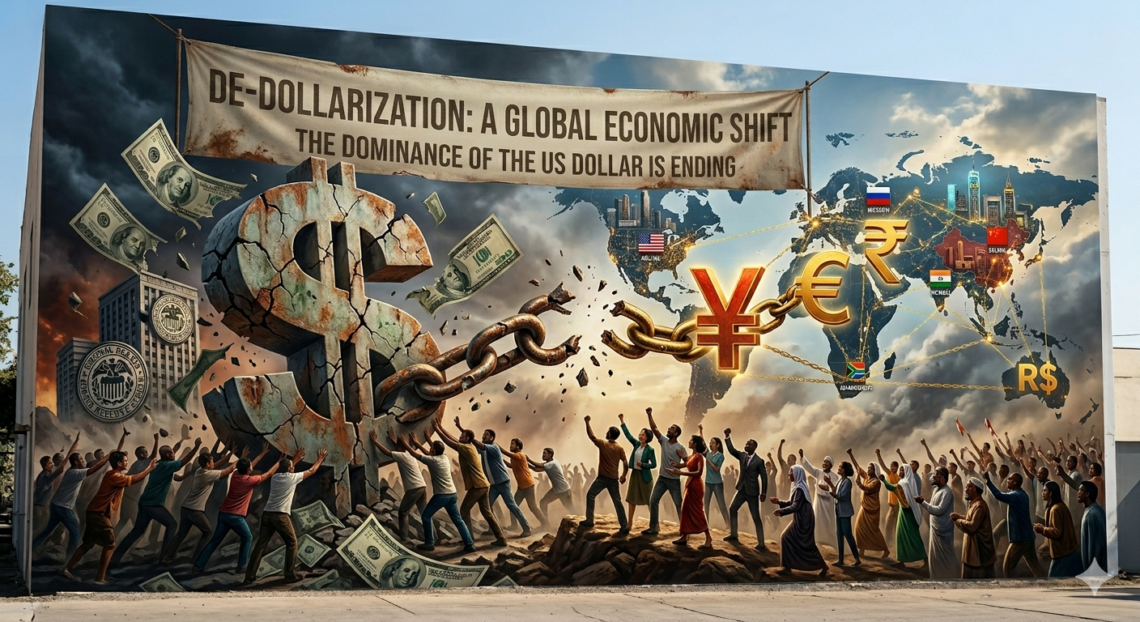
For decades, the US dollar has been the undisputed king of the global financial system. It’s the currency in which oil is priced, most international trade is settled, and countries park their foreign reserves. But in recent years, a quiet but powerful shift has begun — de-dollarisation. Countries are slowly reducing their dependence on the dollar, and despite America’s best efforts, this process seems almost impossible to reverse.
What is De-Dollarisation Exactly?
De-dollarisation doesn’t mean the dollar will disappear tomorrow. It simply means countries are diversifying away from exclusive reliance on the US dollar for trade, reserves, and investment. They’re settling bilateral trade in their own currencies, increasing holdings of gold, and exploring alternatives like the Chinese yuan, or even new BRICS payment systems. This isn’t some conspiracy theory — it’s happening in plain sight. Russia, China, India, Brazil, Saudi Arabia, and several others are actively pushing in this direction.
Why is This Happening Now?
The biggest catalyst has been America’s weaponisation of the dollar. After the Russia-Ukraine conflict began, the US and its allies froze hundreds of billions of dollars in Russian central bank reserves. This sent a clear message to every country in the world: “Your dollars are safe with us… until we decide they’re not.”That single move did more damage to dollar confidence than anything else in recent memory. Countries realised that holding too many dollars comes with serious political risk. If you’re not aligned with Washington, your money could be frozen overnight.
Other reasons include:
- Massive US debt and endless money printing, which erodes long-term confidence in the dollar.
- The rise of China as an economic superpower that wants to internationalise the yuan.
- Faster and cheaper alternatives to SWIFT (like China’s CIPS or India’s RuPay systems).
- Growing trade between non-Western countries that doesn’t need dollars as an intermediary.
Can the USA Actually Stop It?
Here’s the honest truth: No, it cannot fully stop it.The US has tried several tools — sanctions, diplomatic pressure, threats, and incentives. But these are proving ineffective in the long run for several reasons:
- It’s Not a Single Enemy, It’s a Trend
De-dollarisation isn’t being driven by one country. It’s a structural shift involving dozens of nations, many of whom don’t even like each other (Saudi Arabia and Iran, for example). You can’t sanction or pressure everyone at once. - Economic Self-Interest is Stronger
Countries like India want to buy Russian oil in rupees. Brazil and China want to trade in their own currencies. These are practical business decisions that save transaction costs and reduce risk. Governments will always prioritise their economic interests over America’s preferences in the long term. - The Dollar’s Strength is Also Its Weakness
Because the dollar is so dominant, any aggressive move by the US to protect it (more sanctions, higher interest rates, etc.) often accelerates the very process it wants to stop. Trust, once broken, is very hard to rebuild. - Technology is Democratising Finance
Central Bank Digital Currencies (CBDCs), blockchain-based settlement systems, and new cross-border payment platforms are making it easier than ever to bypass the traditional dollar-based system.

What the US is Doing (and Why It’s Not Enough)
The US is trying to maintain dollar dominance through military strength, control over SWIFT, and by keeping its financial markets attractive. But these are defensive measures. The world has changed. Multipolarity is no longer a buzzword — it’s becoming reality. Even close US allies are hedging. Europe is increasing gold purchases. Gulf countries are exploring yuan-based oil sales. The momentum is clearly visible.
The Future Outlook
The dollar isn’t going to collapse. It will likely remain the most important currency for years, maybe decades. But its exclusive dominance is ending. We’re moving toward a more fragmented system — a basket of currencies, gold, and digital alternatives. This transition will be messy. It could increase volatility in global markets and make international trade more complicated. But for many countries tired of living under the dollar’s shadow, that’s a price worth paying.
Bottom line: The US cannot stop de-dollarisation because it’s not just a policy choice — it’s a natural reaction to changing global power dynamics. When you weaponize the world’s reserve currency too aggressively, eventually the world starts looking for exits. And those exits are now open.