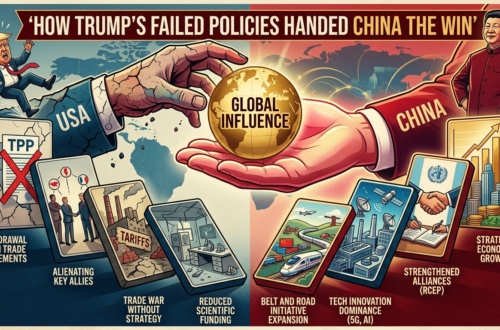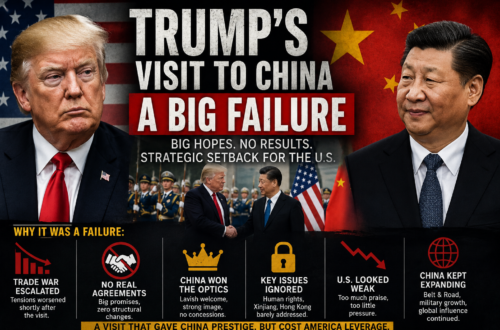
Introduction: The Growing Rivalry Between Washington and Beijing
The relationship between the United States and China has become one of the most important geopolitical rivalries of the 21st century.
For decades, the two countries were deeply connected through trade and global business. But in recent years, tensions have increased over:
- trade,
- technology,
- military expansion,
- and global influence.
Many American policymakers now argue that stronger economic pressure—including tougher sanctions—may be necessary to counter China’s growing strategic ambitions.
Supporters of sanctions believe the issue is no longer just about economics.
They argue it is about national security, global stability, and protecting America’s long-term interests.
1. Allegations of Currency Manipulation
One major criticism against China has been its alleged manipulation of the yuan to support exports.
For years, critics in Washington argued that:
- China kept its currency artificially weak,
- making Chinese products cheaper globally,
- while hurting American manufacturing industries.
This imbalance, according to US officials and economists, contributed to:
- factory closures,
- job losses,
- and America’s large trade deficit with China.
Although China denies intentionally manipulating its currency, the issue remains a major point of tension.
2. China’s Oil Purchases From Iran
The United States has imposed sanctions on Iran over:
- nuclear concerns,
- regional military activity,
- and alleged support for militant groups.
However, China has continued purchasing large amounts of Iranian oil despite Western pressure.
Critics argue this weakens the effectiveness of US sanctions and provides Tehran with important economic support.
For Washington, this creates frustration because:
- sanctions lose impact,
- and American foreign policy objectives become harder to enforce.
3. Military Cooperation With Pakistan
China has become Pakistan’s closest strategic partner.
The two countries cooperate heavily in:
- defense technology,
- missile systems,
- fighter aircraft,
- and military infrastructure.
Critics in the US and India argue that Chinese military assistance strengthens Pakistan’s military capabilities in an already unstable region.
Projects linked to the China-Pakistan Economic Corridor (CPEC) have also raised security concerns for Western analysts.
4. China’s Relationship With North Korea
China remains North Korea’s biggest economic partner.
Although Beijing officially supports stability and denuclearization, critics argue that China has not used its full influence to pressure Pyongyang.
North Korea’s:
- missile tests,
- nuclear development,
- and military provocations
continue to threaten regional security in East Asia.
Some US strategists believe stronger sanctions on Chinese entities dealing with North Korea could increase pressure on Pyongyang.
5. Intellectual Property and Technology Concerns
Another major issue is intellectual property theft and technology competition.
American companies and officials have repeatedly accused China of:
- forced technology transfers,
- cyber espionage,
- and copying sensitive technologies.
The US fears that advanced Chinese technological growth in areas like:
- artificial intelligence,
- semiconductors,
- and telecommunications
could challenge American dominance in critical industries.
This concern played a major role in restrictions placed on companies like Huawei.
6. Expansion in the South China Sea
China’s growing military presence in the South China Sea has alarmed many countries.
Beijing has:
- built artificial islands,
- expanded naval activity,
- and claimed disputed territories.
The US and its allies argue that these actions threaten:
- freedom of navigation,
- regional stability,
- and international maritime law.
This has increased military tensions between China and Western powers.
7. Human Rights Criticism
China has also faced international criticism over:
- Xinjiang policies,
- restrictions in Hong Kong,
- and limits on political freedoms.
Many American lawmakers believe economic pressure and sanctions are necessary to respond to these concerns.
China strongly rejects these accusations and describes them as interference in its internal affairs.
Conclusion: Economic Pressure as a Strategic Tool
Supporters of stronger sanctions believe the United States must take a tougher approach toward China to protect:
- national security,
- economic interests,
- and global influence.
Critics, however, warn that extreme sanctions could:
- damage global trade,
- hurt American businesses,
- and increase tensions between the world’s two largest economies.
The debate ultimately reflects a bigger reality:
The US-China rivalry is no longer just a trade dispute.
It is a struggle over technology, influence, security, and the future global order.