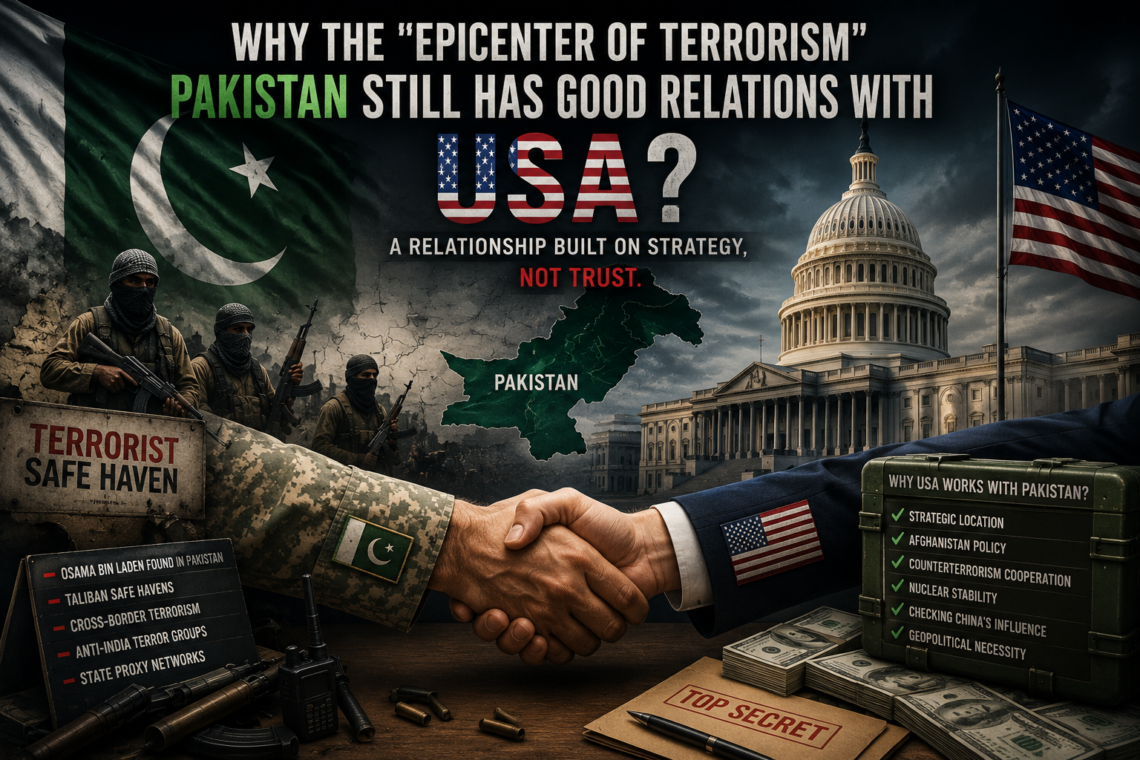
Introduction: America’s Most Complicated Ally
For decades, Pakistan has faced serious international allegations of harboring, supporting, or tolerating extremist groups operating in South Asia.
From the discovery of Osama bin Laden inside Pakistan in 2011 to repeated accusations regarding Taliban safe havens and anti-India militant organizations, critics have often questioned whether Pakistan has truly acted against terrorism—or strategically used militant groups to protect its regional interests.
Despite all this, the United States has continued to maintain military, diplomatic, and intelligence ties with Islamabad.
This raises an uncomfortable geopolitical question:
Why does Washington continue engaging with a country that has repeatedly faced accusations linked to terrorism and extremism?
The answer lies in strategy, geography, nuclear weapons, and the harsh reality of global politics.
Pakistan’s Long Shadow of Terror Allegations
Pakistan’s image in global politics has been deeply affected by decades of terrorism-related controversies.
Over the years, multiple militant organizations have reportedly operated from Pakistani soil, including:
- Taliban-linked networks
- Lashkar-e-Taiba
- Jaish-e-Mohammed
- The Haqqani Network
Many international observers and intelligence analysts have accused elements within Pakistan’s security establishment of maintaining ties with some of these groups for strategic purposes—particularly in Afghanistan and against India.
The killing of Osama bin Laden in Abbottabad, just miles away from a major Pakistani military academy, further damaged Pakistan’s credibility globally.
For critics, the incident raised a difficult question:
How could the world’s most wanted terrorist live inside Pakistan for years without support or protection?
The “Double Game” Allegation
One of the biggest accusations against Pakistan has been that it played a “double game” during the US War on Terror.
While publicly cooperating with America after 9/11, Pakistan was repeatedly accused by US officials and Afghan authorities of allowing Taliban networks to regroup across the border.
This created deep frustration in Washington.
American leaders often found themselves in a strange situation:
- depending on Pakistan for logistics and intelligence,
- while simultaneously accusing it of enabling instability.

Why the US Still Needs Pakistan
Despite these concerns, America has never completely cut ties with Pakistan.
The reason is simple: In geopolitics, countries often work together based on strategic interests—not emotions.
1. Pakistan’s Strategic Location
Pakistan sits in one of the world’s most sensitive regions.
It borders:
- Afghanistan
- China
- Iran
- India
This location makes Pakistan extremely important for:
- Military operations
- Intelligence gathering
- Regional influence
During the US war in Afghanistan, Pakistan became a crucial logistical route for American supplies and operations.
Without Pakistan’s cooperation, America’s presence in Afghanistan would have been far more difficult.
2. Afghanistan and Counterterrorism
After the 9/11 attacks, the US needed Pakistan’s help to fight Al-Qaeda and the Taliban.
Pakistan provided:
- Airspace access
- Intelligence cooperation
- Military coordination
Even though relations became tense over time, Washington believed that completely isolating Pakistan could make the region even more unstable.
3. Nuclear Weapons Factor
Pakistan is also a nuclear-armed country.
This changes everything.
The US wants to ensure:
- Stability inside Pakistan
- Security of nuclear assets
- Prevention of extremist influence over nuclear infrastructure
For Washington, maintaining communication with Pakistan is considered safer than pushing the country into isolation.
4. China’s Growing Influence
Another major reason is China.
Pakistan and China share very close relations, especially through projects like the China-Pakistan Economic Corridor (CPEC).
As US-China rivalry grows, America does not want Pakistan to move completely into China’s sphere of influence.
Maintaining ties with Islamabad gives Washington at least some strategic balance in the region.
5. Geopolitics Is Often About “Managing Risks”
In international politics, countries do not always choose perfect allies.
Sometimes, they work with difficult partners because the alternative could be worse.
The US-Pakistan relationship has always been based on:
- Mutual need
- Temporary cooperation
- Strategic calculation
Not necessarily trust.
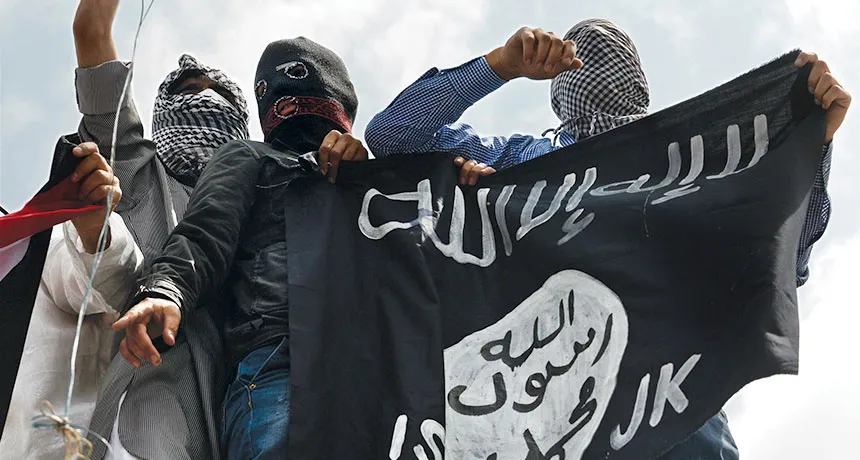
A Relationship Full of Contradictions
The relationship between the US and Pakistan has seen:
- Military cooperation
- Economic aid
- Sanctions
- Diplomatic tensions
- Public criticism
At times, American leaders praised Pakistan.
At other times, they openly accused it of playing a “double game.”
This inconsistency reflects how complex the partnership really is.
Conclusion: Interests Over Ideals
The US-Pakistan relationship is one of the clearest examples of how geopolitics works in the real world.
Countries often maintain relations not because they fully agree with each other—but because strategic interests demand it.
Pakistan remains important due to:
- Its geography
- Nuclear capabilities
- Influence in Afghanistan
- Position between major powers
And for the United States, maintaining influence in such a critical region continues to outweigh complete disengagement.
In geopolitics, alliances are rarely simple.