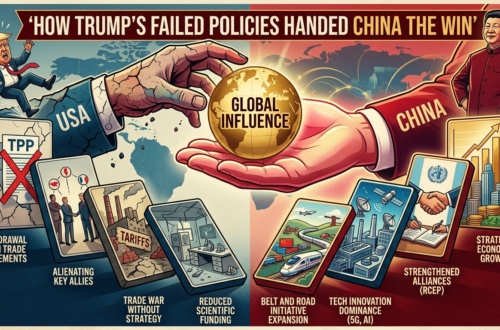
Introduction: A Visit Filled With Expectations
When Donald Trump visited China as President of the United States, the trip attracted global attention.
At the time, US-China relations were becoming increasingly tense over:
- trade,
- technology,
- military competition,
- and global influence.
Many hoped the visit would:
- reduce tensions,
- improve trade relations,
- and create a stronger diplomatic understanding between the world’s two biggest economies.
Instead, critics argue the visit produced more symbolism than real results.
For many analysts, the trip highlighted how difficult it had become for Washington to influence Beijing.
1. China Controlled the Narrative
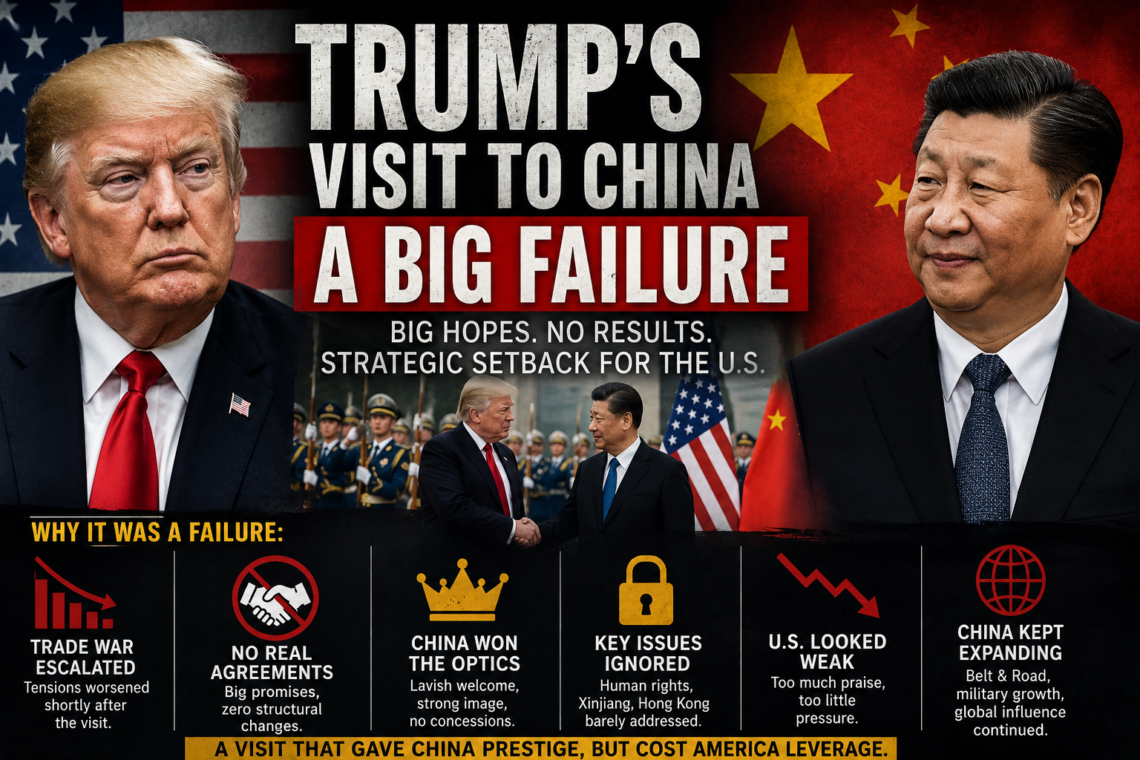
One major criticism was that China appeared to dominate the optics and messaging of the visit.
Beijing organized:
- grand ceremonies,
- luxurious state events,
- and carefully managed media coverage.
While the visuals looked impressive, critics argued China successfully projected itself as a rising superpower dealing confidently with America.
Some analysts believed Trump appeared more focused on praise and personal diplomacy than pressing China aggressively on key disputes.
2. Trade Imbalance Problems Remained Unsolved
At the center of US-China tensions was the massive trade imbalance.
Trump had promised:
- tougher trade policies,
- protection for American manufacturing,
- and stronger action against unfair economic practices.
However, critics argue the visit produced very few concrete structural changes.
Issues such as:
- intellectual property concerns,
- market access restrictions,
- and trade deficits
continued even after the trip.
This eventually led to the larger US-China trade war that followed.
3. China Gained Strategic Legitimacy
The visit was seen by some as a diplomatic victory for Beijing.
At a time when China wanted to present itself as:
- stable,
- powerful,
- and globally respected,
hosting the American president in such dramatic fashion helped strengthen President Xi Jinping’s international image.
Critics argue China gained prestige without making major strategic concessions.
4. Human Rights Issues Received Limited Attention
Another criticism was the lack of strong public pressure regarding:
- human rights concerns,
- censorship,
- Xinjiang policies,
- and political freedoms.
Many Western observers expected the US president to raise these issues more forcefully.
Instead, economic discussions dominated much of the visit.
This led critics to argue that Washington appeared too soft on Beijing.
5. China Continued Expanding Globally
Despite diplomatic engagement, China continued aggressively expanding its global influence through:
- the Belt and Road Initiative,
- military modernization,
- technology expansion,
- and South China Sea activities.
The visit did little to slow China’s long-term geopolitical ambitions.
For many analysts, this proved that symbolic diplomacy alone could not change Beijing’s broader strategy.
6. The Trade War Soon Escalated Anyway
Perhaps the clearest sign that the visit failed to create lasting stability was what happened afterward.
Within a short time:
- tariffs increased,
- economic tensions escalated,
- and relations between the two countries worsened dramatically.
The US-China trade war became one of the biggest global economic conflicts in recent history.
This made critics question:
If the visit was successful, why did relations deteriorate so quickly afterward?
Supporters See It Differently
Not everyone considers the visit a failure.
Supporters argue Trump:
- opened direct communication channels,
- pressured China more aggressively than previous administrations,
- and signaled America’s willingness to challenge Beijing economically.
Some also believe the visit helped expose deeper problems in US-China relations that had been ignored for years.
Conclusion: A Turning Point in US-China Relations
Trump’s China visit symbolized a changing global order.
For decades, the US believed economic cooperation would gradually improve relations with China.
But by the time of Trump’s presidency, the relationship had evolved into strategic rivalry.
Critics argue the visit showed:
- China’s growing confidence,
- America’s declining leverage,
- and the limits of personal diplomacy in a geopolitical power struggle.
In the end, the visit may be remembered less as a diplomatic breakthrough—and more as the beginning of a much more confrontational era between Washington and Beijing.