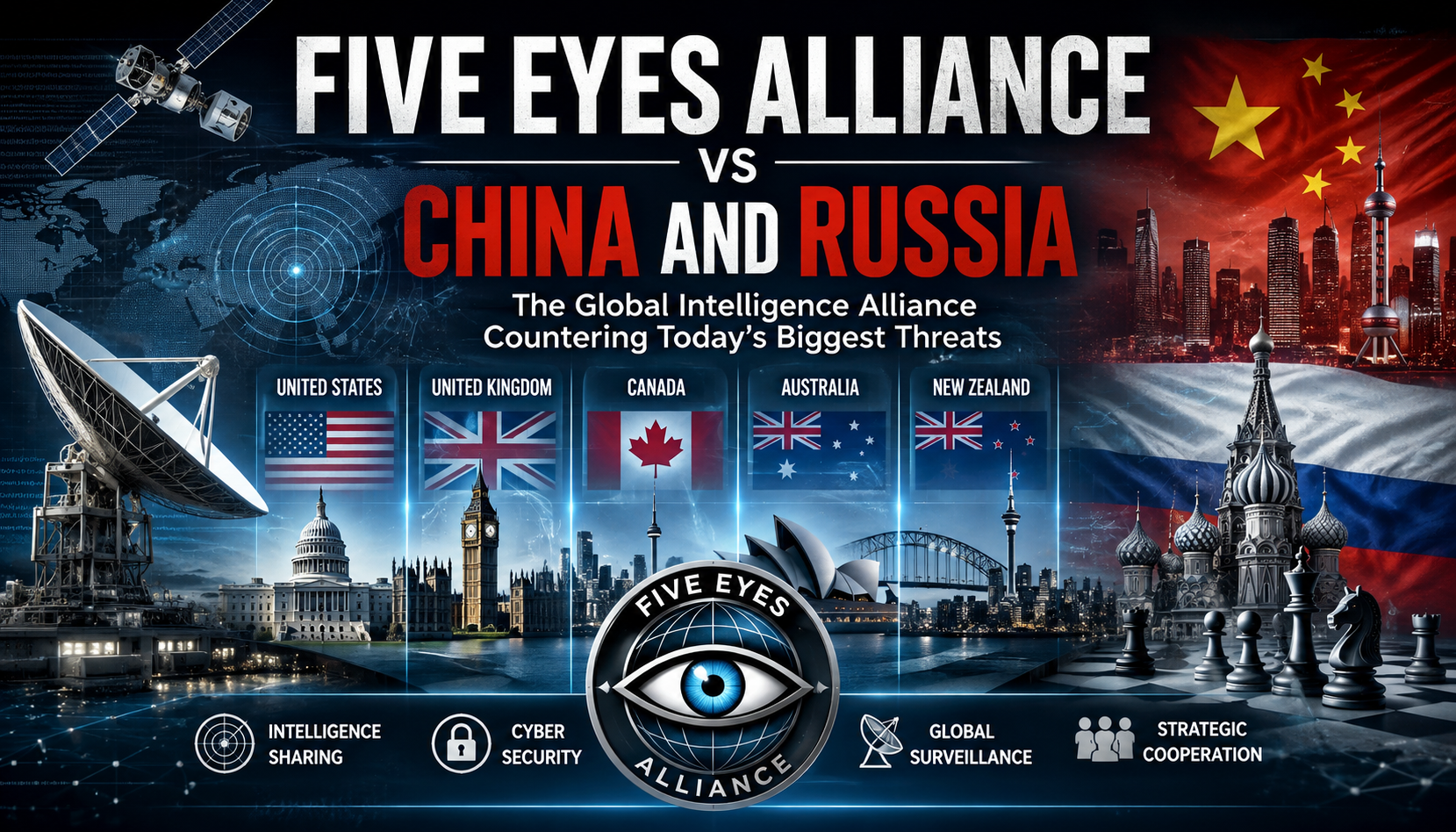
Introduction: A Quiet Alliance with Global Power
In today’s world, power is not just about armies and weapons.
It’s about information.
Behind the scenes, a small group of countries shares some of the world’s most sensitive intelligence—monitoring threats, tracking rivals, and shaping global strategy.
This group is known as the Five Eyes Alliance.
And in recent years, its focus has increasingly shifted toward two major powers: China and Russia.
What is the Five Eyes Alliance?
The Five Eyes (often written as FVEY) is an intelligence-sharing alliance between five countries:
- United States
- United Kingdom
- Canada
- Australia
- New Zealand
These countries work together to collect, analyze, and share intelligence—especially signals intelligence (intercepted communications, surveillance data, etc.).
What makes Five Eyes unique is its level of trust.
Member countries share intelligence with each other almost as if they were one nation.
When and Why Was It Formed?
The origins of Five Eyes go back to World War II.
- In 1941, the US and UK signed the Atlantic Charter, laying the groundwork for cooperation.
- In 1946, they formalized their intelligence partnership through the UKUSA Agreement.
Over time, Canada, Australia, and New Zealand joined, forming what we now call the Five Eyes.
Original purpose:
👉 To monitor and counter the Soviet Union during the Cold War
After the Cold War ended, the alliance didn’t disappear.
Instead, it evolved to tackle new global threats—terrorism, cyber attacks, and now, rising geopolitical rivals.
Why Are China and Russia the Focus Today?
In recent years, both China and Russia have challenged Western influence in different ways:
Russia
- Military actions (Ukraine, Crimea)
- Cyber warfare and election interference
- Energy politics in Europe
China
- Rapid military expansion
- Influence in global trade and technology
- Tensions over Taiwan and the South China Sea
- Concerns over surveillance and data security
For the Five Eyes countries, these developments represent strategic and security challenges.
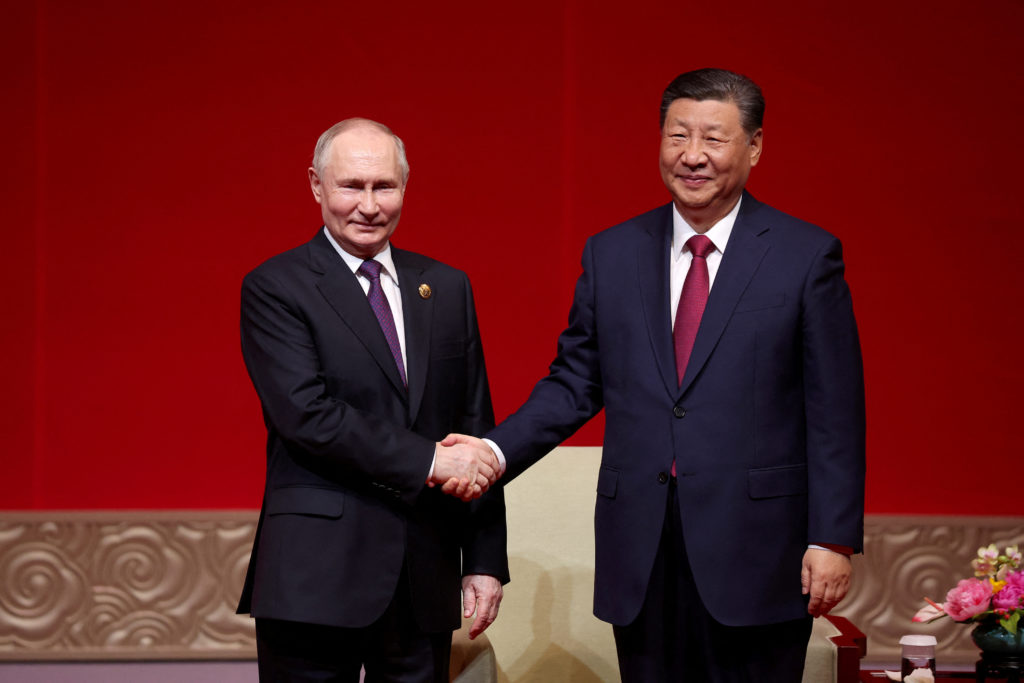
How Does Five Eyes Counter China and Russia?
The Five Eyes alliance doesn’t operate like a military bloc (like NATO).
Its strength lies in intelligence and coordination.
1. Intelligence Sharing
Member countries share real-time intelligence on:
- Military movements
- Cyber threats
- Political developments
👉 This helps them stay ahead of potential risks.
2. Cybersecurity and Surveillance
Five Eyes plays a major role in tracking:
- Cyber attacks (especially from state-backed groups)
- Digital espionage
For example, the alliance has raised concerns about Chinese tech companies and data security risks.
3. Strategic Coordination
The alliance helps align policies among member countries:
- Sanctions against Russia
- Technology restrictions on China
- Joint security statements
👉 This creates a more unified global response.
4. Expanding Partnerships
Although Five Eyes has only five members, it often works with other countries like:
- Japan
- Germany
- India (in limited contexts)
This broader cooperation increases its global reach.
Limitations of the Five Eyes Alliance
Despite its power, Five Eyes has limits:
- It is not a military alliance
- It cannot directly intervene in conflicts
- Member countries sometimes have different economic interests, especially with China
👉 So, its impact depends heavily on coordination and political will.
Conclusion: Power in Information
The Five Eyes alliance shows that in modern geopolitics,
information can be as powerful as weapons.
As tensions with China and Russia continue, this quiet intelligence network will likely play an even bigger role in shaping global strategy.
But its success will depend on one key factor:
👉 How well its members stay united in a rapidly changing world